

Live Weather: Weather Forecast
Weather Forecast - WaiWao Studio
Weather apps are easy to underestimate until you need one at the exact right moment. I tried Live Weather: Weather Forecast as a daily weather companion, and my first impression was that it aims to keep the experience focused: open it, check the conditions around you, and decide what to wear, when to leave, or whether an outdoor plan still makes sense. It is a free weather app from Weather Forecast - WaiWao Studio, available for everyone and built for Android devices running version 6.0 or later.
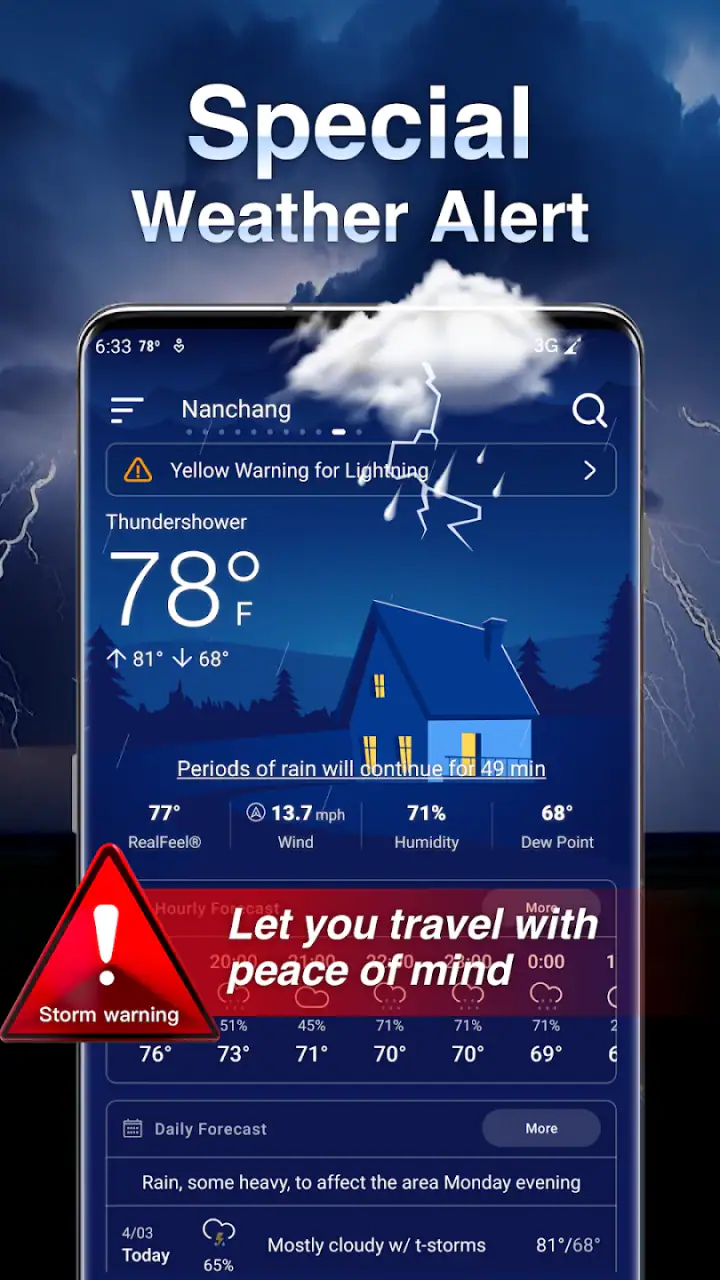
The app’s main promise is straightforward: current local conditions alongside hourly and daily forecasts. That makes it more useful than a simple temperature display, because a quick glance can help answer two different questions. What is happening now, and what is likely to happen later? I found that distinction important during busy mornings, when the current sky looked harmless but the forecast suggested carrying an umbrella for the journey home.
What to expect when you first open it
Live Weather: Weather Forecast is best understood as a practical glanceable tool rather than a full replacement for every specialized weather service. If you want a fast answer before leaving home, its local focus makes sense. If you are planning a long hike, a flight, a sailing trip, or anything where highly technical meteorological information matters, I would still compare it with a service designed specifically for that activity.
The app sits in the weather category and has built a substantial audience, with more than ten million installs. Its average rating is 4.8 from roughly one hundred ninety-five thousand ratings, supported by about eight thousand four hundred written reviews. Those figures suggest that many people find the basic experience dependable enough for everyday use, although popularity alone should not replace checking whether the layout and forecast style suit your routine.
One thing I appreciated is that the app does not require me to turn a simple question into a research session. I can think, “Do I need a jacket?” or “Can I walk to the store later?” and use the local conditions and forecast view as a starting point. That simplicity is its strongest identity. It is not trying to make ordinary weather checking feel like a technical dashboard.
Latest News

Uber Eats Under Pressure: What Happens When Delivery Goes Wrong

How QR & Barcode Scanner Adapts to Android and iOS Innovations

Why Waze Navigation & Live Traffic Is Your Essential Travel Companion

CapCut Mastery: Unleash Hidden Features for Pro-Level Editing

How OS Updates Enhance Roblox Adventures

Teacher Simulator: Exam Time Turns Quick Classroom Judgments into a Repetitive Loop
The free download makes it easy to test without committing money at the beginning. There are in-app purchases priced from $2.99 to $4.99 per item, so I would pay attention to what is included in the free experience before deciding whether any optional purchase is worthwhile. For most people, the sensible approach is to use the app for several days across different routines and weather changes, then judge whether it earns a permanent place on the phone.
Who will get the most from it
I think this app is a good fit for commuters, parents organizing school runs, students walking between classes, dog owners, and anyone who wants a quick local forecast without digging through a complicated interface. It is also useful for people who prefer checking conditions in short bursts rather than reading long explanations about pressure systems and atmospheric patterns.
A realistic example is a weekday commute. Before leaving, I check the current conditions, then scan the hourly forecast for the time I expect to return. If rain appears later, I can take an umbrella in the morning instead of discovering the problem after work. The value is not that the app makes the decision for me; it puts the relevant time windows together so I can make a better decision quickly.
Gallery
I would be more cautious about recommending it to users who need detailed radar interpretation, specialist warnings, long-range planning tools, or extensive customization. The app’s appeal comes from being approachable, and that usually means it will not satisfy someone looking for a professional meteorological workstation. For those users, a dedicated weather service with deeper layers and analysis may be the better choice.
Setting it up without overthinking the process
After installing it, my advice is to begin with one location and learn the basic rhythm of the screen before trying to make it part of every routine. Start by checking the current local weather, then move to the hourly view and finally the daily outlook. This order matters because it prevents a common mistake: making a decision based only on what the sky looks like at the moment.
The app was released on February 22, 2023, and the current version is 1.1.42. That places it on a fairly mature release path rather than making it feel like an experimental first version. I still recommend keeping expectations practical when comparing forecasts. Weather information can change, and a forecast is guidance rather than a guarantee, especially when conditions are shifting quickly.
When the app asks you to establish a local context, choose the place you actually care about most. For many users, that will be home. For others, it may be a workplace, campus, or a family member’s area. The useful habit is to avoid treating a displayed location as automatically correct just because the weather looks plausible. A nearby town can have noticeably different conditions, particularly around coastlines, hills, and dense urban areas.
I also suggest avoiding the temptation to judge accuracy from one isolated forecast. Check the app at the same times over several days and compare what it predicted with what you actually experienced. That simple personal test is more useful than relying only on a rating, because local geography and your own travel pattern affect how valuable the information feels.
The first meaningful success
The first successful action is not merely opening the app. It is using both the current view and the forecast timeline to make a small decision. For example, check the weather before leaving for work, look at the hours covering your commute, and decide whether you need an extra layer or rain protection. Once that becomes a habit, the app starts to feel purposeful rather than decorative.
A second useful workflow is planning an outdoor task with a flexible start time. Suppose I need to wash the car, walk the dog, or visit a market. I can look beyond the next few minutes and identify a more comfortable window. This is where the hourly forecast earns its place: it helps turn “Is today suitable?” into the more practical question, “Which part of today is least likely to disrupt me?”
For family planning, I would check the forecast at two separate points: before making the plan and shortly before leaving. That avoids overcommitting to an early prediction. The app works well as a quick checkpoint, but I would not treat the first morning glance as a permanent promise for the entire day.
One non-obvious tip is to use the daily view for broad planning and the hourly view for decisions that affect the next few hours. Mixing those jobs can create confusion. A generally pleasant daily outlook does not mean every hour will be comfortable, and one unpleasant hour does not necessarily ruin the whole day.
Where new users may hesitate
The phrase “live weather” can create the expectation that every figure will update continuously or that the app can predict sudden changes with complete certainty. I read it more sensibly: the app is designed to present current local conditions and forecast information in a convenient way. That is useful, but it does not remove the natural uncertainty of weather forecasting.
Another possible confusion is the difference between current conditions and the forecast. Current weather describes what is happening around the selected location now. The hourly and daily sections are forward-looking. If those views appear to disagree, it may simply be because the weather is expected to change. I found it better to read them as connected parts of the same picture rather than as competing answers.
Users may also wonder whether the app is suitable for severe or rapidly changing conditions. My approach is cautious: use it as one source of awareness, but pay attention to official local alerts when safety is involved. A convenient forecast app is excellent for deciding on clothing or errands; it should not be the only thing guiding decisions during dangerous weather.
The presence of optional purchases is another point worth understanding early. The app is free to download, but some items cost between $2.99 and $4.99. I would avoid purchasing anything immediately. First establish whether the free version already covers your normal needs. If it does, there is no reason to pay simply because an optional item is available.
How it compares with familiar alternatives
Compared with the default weather screen that comes with many phones, this app is appealing if you want a dedicated place for local conditions, hourly planning, and a daily overview. The advantage is concentration: weather information is the whole purpose of the app, so checking it feels more deliberate than opening a general assistant or notification panel.
Compared with a search engine, it can be more convenient for repeated checks. A search is useful when you need a one-off answer, but an installed weather app reduces the number of steps between opening your phone and seeing the information you use every day. That difference is small once, yet meaningful when repeated before commuting, exercising, or collecting children.
Compared with specialist weather applications, the trade-off is depth. A specialist tool may be preferable if you need advanced maps, detailed storm tracking, or information tailored to outdoor professions. I would choose this app when speed and readability matter more than technical detail. I would choose the specialist alternative when the cost of missing a weather change is high.
There is also a personal preference involved. Some users want a weather app that feels calm and uncomplicated. Others want to customize every panel and inspect layers of information. Live Weather: Weather Forecast makes more sense for the first group. If you enjoy exploring charts and meteorological data, its focused approach may feel limited rather than refreshing.
Small habits that improve the experience
Use the current view as a reality check, not as the entire forecast. Look outside, notice the conditions, and then use the hourly timeline to see whether they are likely to persist. This is especially helpful on days when clouds, wind, or temperature change quickly.
Check the forecast at the time your decision actually matters. If you are planning an evening walk, a morning glance may be too early to settle the question. If you are packing for work, check both the departure and return periods. This workflow makes the app more useful than simply opening it out of habit.
Keep your expectations tied to the app’s purpose. It is a local forecast companion, not a substitute for judgment. For routine choices, it can save time. For safety-critical plans, combine it with official warnings and local knowledge. That is not a weakness unique to this application; it is a sensible boundary for any consumer weather forecast.
The age rating is Everyone, which matches the straightforward nature of the app. It is suitable for households where different people need the same basic information, including younger users who are old enough to read a forecast and make simple planning decisions. The interface is most valuable when everyone uses the same practical routine: check now, check the relevant hours, then decide.
My recommendation after using it
I would recommend Live Weather: Weather Forecast to someone who wants an uncomplicated Android weather app for daily decisions. The strongest reason is not a flashy feature; it is the combination of local current conditions with hourly and daily planning in one place. That covers the questions most people ask before leaving home.
I would not recommend installing it solely because it has a high rating or a large user base. Try it with your own location and schedule. If you regularly need specialist maps or detailed weather analysis, look elsewhere. If your goal is to know whether to carry a coat, move an outdoor task, or prepare for a wetter commute, this app is much closer to the right tool.
Weather Forecast - WaiWao Studio has kept the product’s purpose easy to understand, and the free entry point lowers the risk of trying it. The optional purchases mean I would review the available experience before spending anything, but that does not undermine the basic appeal for ordinary users.
My final view is positive but measured: this is a practical weather app for people who value quick, local answers and a clear path from “What is it like now?” to “What should I do next?” Install it, set up the location you actually use, test the hourly view against your real routine, and give it a few days before deciding. Its real strength is turning a forecast into a small, useful everyday decision.
FAQs for Live Weather: Weather Forecast
What features does Live Weather: Weather Forecast offer?
Live Weather: Weather Forecast provides real-time weather updates, including temperature, humidity, and precipitation forecasts. It also offers detailed hourly and 7-day forecasts, weather alerts, and radar maps. The app includes customizable widgets and supports multiple locations, allowing users to get weather information for any place worldwide.
Is Live Weather: Weather Forecast free to use?
The app is available for free with basic features. However, it offers a premium version with additional features such as ad-free usage, advanced radar maps, and extended forecast details. Users can opt for in-app purchases or subscriptions to unlock these premium features, enhancing their weather-tracking experience.
How accurate are the weather forecasts in the app?
Live Weather: Weather Forecast uses data from multiple reliable sources, including meteorological departments and satellite systems, to ensure high accuracy. The app updates frequently to provide the latest information. However, like all weather services, it may occasionally vary due to unforeseen atmospheric changes.
Does the app require an internet connection?
Yes, Live Weather: Weather Forecast requires an internet connection to fetch the latest weather data and updates. While some offline functionality is available, such as previously downloaded weather reports, the most accurate and up-to-date information is accessed through online connectivity.
Can I customize weather alerts in the app?
Yes, the app allows users to set custom weather alerts based on personal preferences. You can choose to receive notifications for severe weather conditions like storms or extreme temperatures. This feature helps users stay prepared for any sudden weather changes in their selected locations.
Pros
- Accurate real-time weather updates.
- User-friendly interface with easy navigation.
- Customizable alerts for severe weather.
- Detailed forecasts for multiple locations.
- Interactive radar and satellite maps.
Cons
- Contains ads that can be intrusive.
- Some features require in-app purchases.
- Occasional loading delays in data.
- Limited widget customization options.
- Battery consumption can be high.


